
10.0.0.0.1 Admin Login
When you have typed 10.0.0.0.1 admin into your browser and the router login page does not appear, you may have a problem. This is a frequent error that occurs when someone attempts to access their router settings.
The correct address is usually 10.0.0.1 not 10.0.0.0.1. The IPv4 address is made up of four numbers separated by dots, but 10.0.0.10 contains five numbers and is not a valid IPv4 address. The local address 10.0.0.1 is still in use today as a private local address by some routers and network devices in 2026. This guide will tell you the proper address, login process, common problems and simple troubleshooting for accessing your router.
10.0.0.0.1 Is Not a Valid IP Address
First of all, 10.0.0.0.1 is an invalid address. There are four parts to an IPv4 address. For example, 10.0.0.1 has four parts: 10, 0, 0 and 1. In comparison, 10.0.0.0.1 has five parts. For this reason, it is not suitable to be used as an IPv4 router address. When users type the address, many users accidentally type an extra zero. While attempting to log in to a router, you should use 10.0.0.1 as the address, as long as it is your router’s gateway address.
10.0.0.1 is a private IPv4 address. Private addresses are not public Internet addresses, but are used in local networks. Private addresses can be used in routers and other network devices to communicate with the computers, phones and other devices within the network. Certain routers have 10.0.0.1 as their default gateway.
How to Log In to 10.0.0.1?
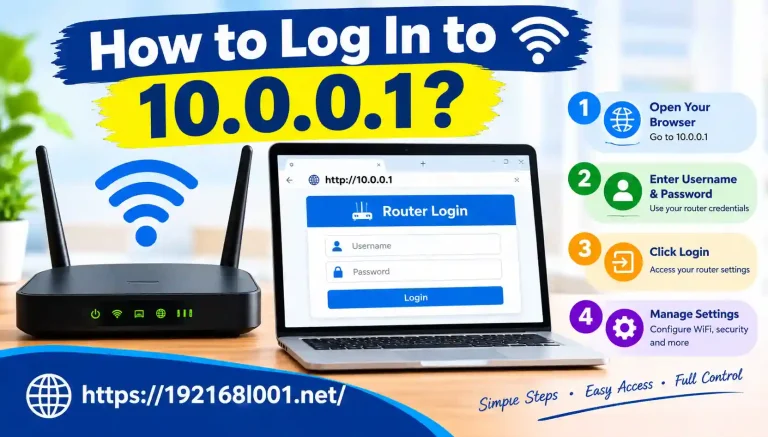
When you use 10.0.0.1 as the gateway, it is typically easy to log in to a router. First of all, join the Wi-Fi network of the router on a device such as a phone or computer. If using a computer, an Ethernet cable is an alternative option for connecting. Then, enter 10.0.0.1 into your web browser. Press Enter to continue. Don’t enter the address in Google or another search engine. Your router should display the login page. Then you have to log in with the administrator username and password.
Each router has its own username and password. Certain routers have the login information on a label attached to the router. Your Internet Service Provider (ISP) may also give you username and password information upon installation of the router.
What to Do If 10.0.0.1 Does Not Open?
Ensure that you are on the correct network. You might not be able to access the router page if the cell phone is connected via its mobile data but not the router’s wireless network. Also, be sure to check the router’s actual gateway address. On Windows, open up the Command Prompt and type in ipconfig. Look under your active connection for Default Gateway. This is typically the web address that you want to put into your browser. If the Gateway displays a different address, then that address will be used in place of 10.0.0.1. Your private gateway might be different depending on the manufacturer and network configuration. Some commonly used addresses include 192.168.100.1, 192.168.0.1 and 192.168.1.254.
10.0.0.1 Is Not Always a Router Admin Page
While 10.0.0.1 is a known address that’s used for the login pages of routers, this does not necessarily make the login page a router admin page. It’s just a private IP address that can be given to a device on a local network. Different network environments can have the same address. Depending on the device with the address, the provided settings and login page are given. This is also for people who are looking for 10.0.0.0.1 admin page, as some users may be searching for a WiFi portal to pay for their internet connection instead of the router administration page.
What You Can Do After Login?
If you’re able to log into the router administration page, you can select options according to your model. A lot of routers offer enough settings to modify the Wi-Fi name and password, security settings and assess connected devices to alter network settings. A few high-end routers offer additional features such as guest network configurations, firewall settings, DNS settings, parental control and firmware updates. Advanced settings are sensitive and need to be used with care. This could cause your devices to be unplugged or impact the network as a whole.
Keep Your Router Login Secure
Access to the router’s administrator should be limited. Never give your administrator password to others who don’t need access to your network. If you can set a new password as an administrator in your router, make sure to use a strong one that you couldn’t guess. Install and follow the manufacturer’s or ISP’s instructions for updating the firmware of your router when updates are available. Do not use websites or applications that reveal the password of a router or give instant access to the router’s administrator. These services can pose security and privacy issues.
Conclusion
The main reason 10.0.0.0.1 admin does not work is simple: 10.0.0.0.1 is not a valid IPv4 address. If you’re searching for a correct address, you’ve likely found 10.0.0.1. Connect to the WiFi network of your router and type in the router’s IP address 10.0.0.1 directly into your browser and log in using the proper administrator credentials. If it doesn’t work, look at your Default Gateway as your router may have a different address. Keep in mind that 10.0.0.1 is not common. Settings, login and gateway will vary based on your network, ISP and router.
FAQs
Is 10.0.0.0.1 a valid IP address?
No. 10.0.0.0.1 is not a normal IPv4 address it contains 5 numerical parts. 10.0.0.1 is the network address which is generally used when referring to the address.
What is the 10.0.0.1 username and password?
No overall login. Refer to the router label, manual or instructions from the ISP for your router.
Why does 10.0.0.1 not work?
There may be another gateway in your router or your device is not connected to the correct network. Look in the Default Gateway in the network settings.