192.168.100.1 Login Admin
If you are trying to get into your router settings, you might have noticed the IP address 192.168.100.1 and it can look a bit familiar.
192.168.100.1 IP Address
Enter 192.168.100.1 into the address bar of your web browser or click the following link to enter the admin site.

This is a private IP address that a few routers, plus some network devices, use to give access to their admin panel, kind of like a front desk. Once there, people can control several settings related to the network, including settings for Wi-Fi, security, connected devices, and other settings for the router, cumulatively. Users can access these settings by navigating to the address http://192.168.100.1 within their web browsers as long as they are connected to the router network.
Typing 192.168.l00.1 is a common mistake for users typing their router login page, when in fact, it should be 192.168.100.1. Note, that all characters should be numerical. Using the correct IP address puts you on the router’s login admin page when your computer/device is connected to the correct network.
What Is 192.168.100.1?
192.168.100.1 is a private IPv4 address commonly used as a local gateway by some routers and networking devices. A private IP address is used inside a local network rather than being directly accessible from the public internet.
When your device is connected to a router that uses this address, you may be able to enter ip 192.168.100.1 in a web browser and reach the router’s administration page.
The address can be used to access settings such as:
- Wi-Fi network name
- Wi-Fi password
- Router security settings
- Connected devices
- Network configuration
- DHCP settings
- Wireless settings
- Firmware and system information
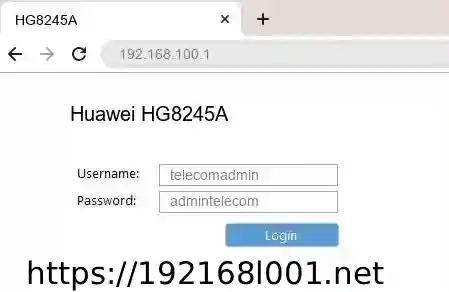
How to Access 192.168.100.1 Login
Before starting, connect your phone, computer or another device to the router. You can use Wi-Fi or an Ethernet cable.
Follow these steps for 192.168.100.1 login:
Step 1: Connect to Your Router
- Connect your device to the router’s Wi-Fi network. If possible, an Ethernet connection can also be used.
- Make sure you are connected to the same local network as the router. You generally cannot access a private router address from a completely different network.
Step 2: Open a Web Browser
- Open a modern browser such as Chrome, Firefox, Edge or Safari.
- You do not need a special application to open the router administration page.
Step 3: Enter the IP Address
Click the browser’s address bar and enter:
- 192.168.l00.1
- Then press Enter.
- If your router uses this address, the login page should appear.
- You may sometimes see people searching for www.192.168.100.1. However, the address is normally entered directly as an IP address. Adding www is unnecessary.
- Similarly, 192.168.100.1. with an extra period is not the normal way to enter the address. Use the standard form: 192.168.100.1
Step 4: Enter Your Login Details
- After the page loads, you may see fields for a username and password.
- Enter the administrator credentials associated with your router.
- The default login information may be printed on a label attached to the router. It may also be included in the device manual or supplied by your internet service provider.
Step 5: Open the Admin Panel
- After successful authentication, you should be taken to the router’s administration interface.
- From there, available options depend on the router model and manufacturer.
What Is the 192.168.100.1 Admin Panel?
The 192.168.100.1 admin panel is the management interface provided by a compatible router or networking device. The exact design differs between manufacturers. Some interfaces are simple, while others contain many advanced settings.
Common options may include:
- Wireless configuration
- Network settings
- Security controls
- Connected device information
- Password management
- DHCP configuration
- System status
- Firmware information
- Restart or reboot controls
Default Username and Password
There is no single username and password that works for every router using 192.168.100.1. Different manufacturers and models can have different credentials. Some devices may use information printed on the router label, while others require credentials created during the initial setup.
If you do not know your login details, check:
- The label on your router.
- The router’s user manual.
- Documentation supplied by your internet provider.
- The manufacturer’s official support information.
How to Change Your Wi-Fi Name
Once you successfully access the router administration interface, you may be able to change the Wi-Fi network name. The setting is commonly found under a section such as Wireless, Wi-Fi or WLAN.
A typical process is:
- Log in to the router.
- Open the wireless settings.
- Find the SSID or Wi-Fi name field.
- Enter your preferred network name.
- Save or apply the changes.
- Reconnect your devices using the new network name.
How to Change Your Wi-Fi Password
Changing your Wi-Fi password regularly can help you maintain control over who connects to your network. After opening the router’s settings through 192.168.100.1, look for the wireless security section.
Depending on the router, you may find options such as:
- Wi-Fi password
- Wireless key
- Security key
- Pre-shared key
- WPA key
192.168.100.1 Not Opening? Try These Solutions
- One of the most common problems is that the 192.168.100.1 login page does not load.
- There can be several reasons for this issue.
Check Your Connection
- First, confirm that your device is connected to the correct router.
- If your phone is using mobile data instead of the router’s Wi-Fi, the local administration page may not be available.
- Turn off mobile data temporarily and connect to the router’s Wi-Fi network.
Check the IP Address
Not every router uses 192.168.100.1.
Your device may have another default gateway. Common private gateway addresses include:
- 192.168.0.1
- 192.168.1.1
- 192.168.100.1
Enter the Address Correctly
Make sure the address is typed correctly.
The correct format is:
- 192.168.100.1
- 192.168.l00.1
- The second example contains lowercase letters such as l instead of numbers. An IPv4 address uses numbers separated by periods, so this mistake can prevent the page from opening. Likewise, www.192.168.100.1 is not necessary. Enter the IP address directly into the browser’s address bar.
Restart the Router
- A simple restart can resolve temporary network problems.
- Turn the router off, wait briefly and turn it back on. Allow it enough time to reconnect to the network before trying the administration page again.
Try Another Browser
If the page does not load correctly, try another browser. You can also clear the browser cache or use a private browsing window.
Use an Ethernet Connection
If Wi-Fi is unstable, connect your computer directly to the router with an Ethernet cable, if the router and computer support it. Then try accessing ip:192.168.100.1 again.
How to Find Your Router’s IP Address
If 192.168.100.1 does not work, finding the default gateway can help identify the correct address.
On Windows
Open Command Prompt and enter:
- ipconfig
- Look for the Default Gateway entry under your active network connection.
- The displayed address is commonly the router’s local gateway.
On Android
The exact menu depends on the Android version and device manufacturer. Open your Wi-Fi settings and select the connected network. Look for network details or gateway information.
On iPhone or iPad
Open Wi-Fi settings and select the information icon beside your connected network. Network details may include the router address.The available options can differ between operating system versions.
192.168.100.1 vs 192.168.1.1
- Both addresses are private IPv4 addresses, but they are not the same.
- 192.168.100.1 may be used by certain routers, modems and networking devices, while 192.168.1.1 is another commonly used private gateway.
- If you enter the wrong address, your router’s login page may not appear.
What Can You Manage From the Router Settings?
- The features available after 192.168.100.1 login depend on the router model.
- However, many router interfaces allow users to manage several important settings.
Wireless Settings
You may be able to change the Wi-Fi name, password, wireless channel and security mode.
Connected Devices
Some routers display a list of phones, computers, smart TVs and other devices currently connected to the network.
Network Settings
Advanced users may find DHCP, LAN, WAN, DNS and other network configuration options.
Security Settings
Router security settings can include firewall options, access controls and wireless encryption settings.
System Information
The administration page may show the router’s firmware version, uptime, hardware information and network status.
Not every router provides all of these features.
Is 192.168.100.1 a Public IP Address?
- No. 192.168.100.1 belongs to the private IPv4 address space.
- Private IP addresses are designed for use within local networks. They are not directly routable across the public internet in the same way as public IP addresses.
- This is why you normally need to be connected to the relevant local network before attempting to access the router administration interface.
Common Mistakes When Using 192.168.100.1
- Small typing errors are common when entering router IP addresses.
- For example, users may search for 192.168.l00.1, where the letter l is used instead of the number 1.
- Another common variation is www.192.168.100.1, but a private IP address does not require www.
You should always enter:
- 192.168.100.1
- directly into the browser address bar.
- Also make sure you are not typing the address into a search engine’s search box. The IP address should be entered into the browser’s address bar.
Tips for Safe Router Administration
The router administration panel controls important network settings, so use it carefully.
Here are some useful security practices:
- If you can, change the default administrator credentials , just to be safe.
- Set a strong Wi‑Fi password, the kind that’s not guessable easily.
- Whenever there are updates, keep the router firmware updated—don’t let it sit too long.
- Try not to share admin credentials unnecessarily, even with “safe” people, you know.
- Every so often review the connected devices list, make sure nothing odd is hanging around.
- Avoid messing with advanced settings unless you really understand what they do.
- When you configure options you do not recognize, rely on the router’s official documentation , first.
Conclusion
192.168.100.1 is a private network address , something many home routers and other networking devices use for their own admin settings. If you’re on the right local network, you might just type that number right into a browser and end up at the router login page or something close to it.
The most important thing, really, is to make sure your router actually uses this gateway. If the page won’t open, don’t jump straight into changes. First check your network connection and the default gateway , because otherwise you could waste time in the wrong place.
Whether your goal is to update your Wi‑Fi password, look at the connected devices or handle other network options, learning the 192.168.100.1 login basics can make routine administration feel less annoying. Just stick with the correct IP address and follow the instructions from your router manufacturer when you adjust any advanced settings.
FAQ’s
What is 192.168.100.1?
It is an example of one of the thousands of private IP addresses used by countless devices, such as routers, that need to have a local gateway address to connect to other devices in a network. This address is normally the first entry point in the network through which devices access the internet.
How do I access 192.168.100.1 login?
To access the login page, connect your device to the router, open your web browser and type this address into the browser: 192.168.100.1. If this router address is assigned to your router, you should get this router’s login page.
Why is 192.168.100.1 not opening?
This address might not be the router address. It might be that your device is not connected to the correct network and there could be a small lag in connecting to the network. Check the default gateway on your device to find the correct router address.
What is the default username and password for 192.168.100.1?
Because there isn’t one universal username and password, users should check the label on their router, read the documentation or check the official website for the router in case they need to change the username and password.
Can I access 192.168.100.1 from my phone?
Yes, however, your phone should be connected to the router’s local Wi-Fi. This address should be the router’s gateway address. Once you are connected to the Wi-Fi network, you should be able to open the router’s web page by opening up your browser and going straight to this address.
What does 192.168.100.1 admin mean?
When you type ‘192.168.100.1’ into your address bar, you’re able to access the admin interface for your router. Access to this feature will vary based on the router you have, with some offering a more robust interface, while other devices offer limited options.
Is www.192.168.100.1 correct?
In this case, omitting the ‘www’ would be correct. In most cases, you would type 192.168.100.1, not adding the ‘www’ or any other text to the URL.
Is 192.168.l00.1 the same as 192.168.100.1?
No. The first one has a letter substituted for a number. The correct IP address is 192.168.100.1.
Can I change my Wi-Fi password through 192.168.100.1?
Generally, as long as your router performs wireless configuration for you, you would be able to log in to the interface, navigate to the Wi-Fi configuration settings, update the password and save to lock new settings. Your other devices will also need to be directed to connect to the new password.
What should I do if I forget my router password?
First, check your router’s documentation or check the instructions from your router’s manufacturer. If a reset is warranted, you should do so as this will reset the unit to its factory settings.